

Meet the people behind this publication


What Is Considered a Dangerously High TSH Level – Thyroid-stimulating hormone (TSH) is a hormone produced by the pituitary gland that controls the production of thyroid hormones. These hormones regulate many vital processes, including metabolism, energy levels, body temperature, and heart function.
Doctors measure TSH levels through a blood test to evaluate thyroid health.
For most adults, normal TSH levels typically range between 0.4 and 4.0 milli-international units per liter (mIU/L).
When TSH levels rise above this range, it usually means the thyroid gland is underactive (a condition called hypothyroidism).
However, the level at which TSH becomes dangerous depends on the degree of elevation and the symptoms experienced.
This article belongs in Health Screenings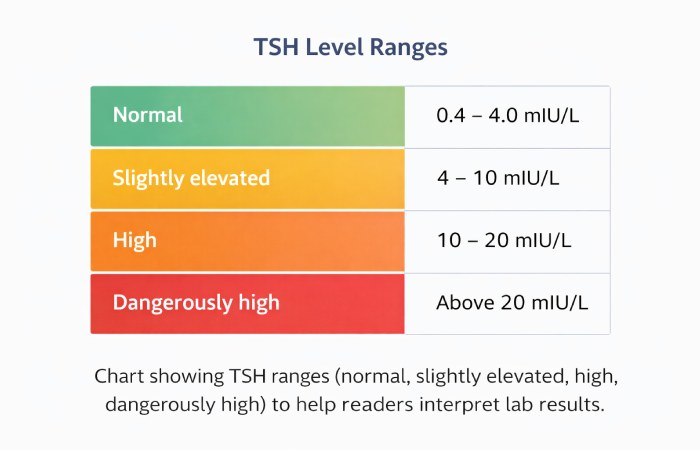
Doctors usually interpret TSH levels using ranges rather than a single number.
| TSH Level (mIU/L) | Meaning |
| 0.4 – 4.0 | Normal thyroid function |
| 4 – 10 | Mildly elevated (possible early hypothyroidism) |
| 10 – 20 | High TSH, likely hypothyroidism |
| Above 20 | Dangerously high, severe thyroid dysfunction |
Levels above 10 mIU/L often require treatment, even if symptoms are mild.
Levels exceeding 20 mIU/L may be considered dangerously high and require immediate medical attention.
At these levels, the body may struggle to maintain normal metabolism and organ function.
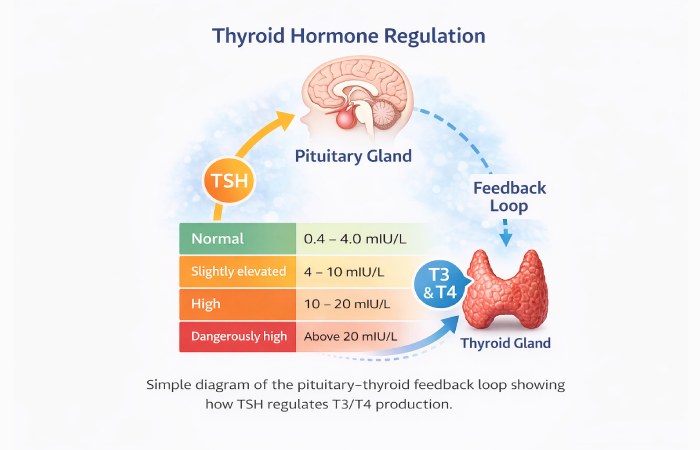
The thyroid system works through a feedback loop between the pituitary gland and the thyroid gland.
Here’s how it works:
If thyroid hormone levels fall too low, the pituitary gland increases TSH to stimulate more production.
This is why high TSH usually means the thyroid is underactive.
Symptoms vary depending on how severe the hormone imbalance is.
Early symptoms may develop gradually and can be easy to overlook.
Common early signs include:
These symptoms occur because the body’s metabolism slows when thyroid hormone levels drop.
When TSH levels become dangerously high, symptoms may worsen and affect multiple body systems.
Possible severe symptoms include:
In rare cases, untreated severe hypothyroidism can lead to myxedema coma, a life-threatening condition requiring emergency care.
Ignoring extremely high TSH levels can lead to serious health complications.
Hypothyroidism may increase cholesterol levels and raise the risk of heart disease.
Studies show that TSH levels above 10 mIU/L are linked with increased cardiovascular risk.
High TSH levels can disrupt hormone balance and ovulation.
Possible complications include:
Low thyroid hormone levels can affect brain function.
Possible symptoms include:
The thyroid controls metabolism.
Severely high TSH may lead to:
In extreme cases, untreated hypothyroidism can cause myxedema, a dangerous condition involving:
This condition is rare but life-threatening.
Several conditions can cause TSH levels to rise significantly.
This autoimmune disorder is the most common cause of hypothyroidism.
The immune system attacks the thyroid gland, reducing hormone production.
The thyroid requires iodine to produce hormones.
Low iodine intake can lead to reduced thyroid function and increased TSH.
People who have had thyroid surgery or radioactive iodine treatment may develop hypothyroidism.
Some medications can affect thyroid function, including:
Rarely, pituitary disorders can disrupt TSH regulation.
Certain groups are more likely to develop thyroid problems.
Women
Women are significantly more likely to develop hypothyroidism than men.
Older Adults
TSH levels tend to increase with age.
People with Autoimmune Disorders
Conditions like:
can increase thyroid disease risk.
Family History
Genetics also play an important role.
Doctors use several tests to diagnose thyroid disorders.
TSH Blood Test
This is the primary test used to evaluate thyroid function.
It measures how much TSH is circulating in the bloodstream.
This test measures the level of free thyroxine (T4).
Doctors often interpret TSH and T4 levels together.
This test checks for autoimmune thyroid diseases such as Hashimoto’s thyroiditis.
Treatment depends on the cause and severity of the hormone imbalance.
The most common treatment is levothyroxine, a synthetic form of thyroid hormone.
It helps restore normal hormone levels and reduce TSH.
Doctors usually check TSH levels every 6–8 weeks after starting treatment to adjust medication dosage.
While medication is often necessary, lifestyle changes may support thyroid health.
Helpful strategies include:
Preventing thyroid imbalance often involves consistent monitoring and healthy habits.
Practical tips include:
You should consult a doctor if you experience symptoms such as:
Early diagnosis can prevent serious complications.
TSH levels above 10 mIU/L are considered significantly elevated, and levels above 20 mIU/L are often considered dangerously high and require medical attention.
For most adults, the normal TSH range is 0.4 to 4.0 mIU/L.
Very high TSH levels may indicate severe hypothyroidism, which can cause fatigue, weight gain, depression, and metabolic problems.
Yes. With proper treatment, such as thyroid hormone replacement therapy, TSH levels often return to normal.
TSH levels usually take 6–8 weeks to stabilize after treatment adjustments.
Understanding what is considered a dangerously high TSH level is important for protecting your thyroid health and overall well-being. While mild elevations may only require monitoring, TSH levels above 10 mIU/L indicate significant thyroid dysfunction, and extremely high levels above 20 mIU/L can signal severe hypothyroidism requiring urgent treatment.
Recognizing symptoms early, seeking medical evaluation, and following appropriate treatment can help restore hormonal balance and prevent serious complications. If you suspect abnormal thyroid levels or experience persistent symptoms, consulting a healthcare professional and getting a thyroid blood test is the best step toward maintaining long-term health.

Syed Sadiq is a health education content researcher who writes evidence-informed guides on symptoms awareness, preventive health habits, and digital safety topics affecting students and families. His articles focus on helping readers understand health-related information clearly before making decisions. Through DionHealthWeb, he publishes structured health-awareness content designed to support informed conversations between readers and healthcare professionals.