

Meet the people behind this publication


Eosinophils are a specialized type of white blood cell that play an important role in the body’s immune system. They are produced in the bone marrow and circulate in the bloodstream before moving into tissues.
Their main functions include:
Although eosinophils make up only a small percentage of white blood cells, they are essential for maintaining immune balance.
In most healthy individuals, eosinophils account for about 1% to 6% of total white blood cells.
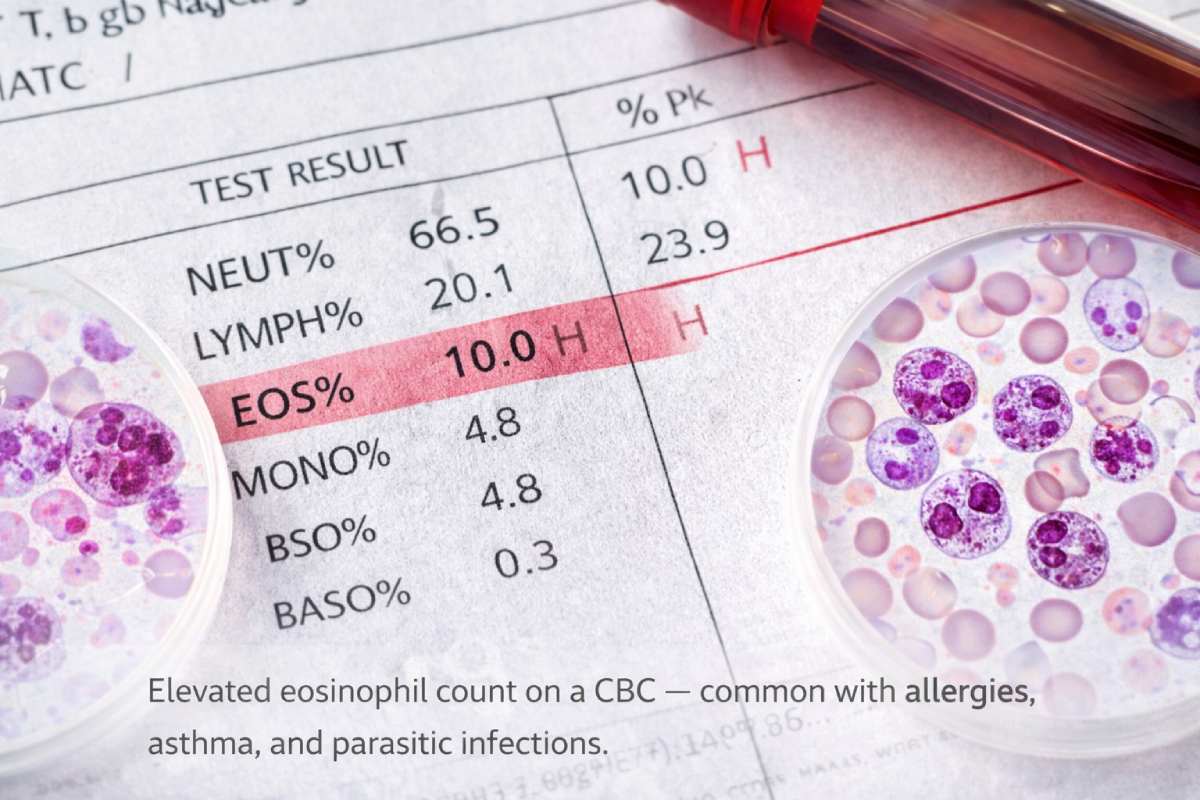
This article belongs in Health ScreeningsWhen a blood test shows elevated eosinophil levels, doctors call the condition eosinophilia.
Eosinophilia generally indicates that the immune system is reacting to something abnormal in the body. This reaction may occur due to infections, allergic responses, inflammation, or certain diseases.
For example:
In some cases, high eosinophils are discovered during routine blood tests without noticeable symptoms.
However, persistent or very high levels may require further medical investigation.
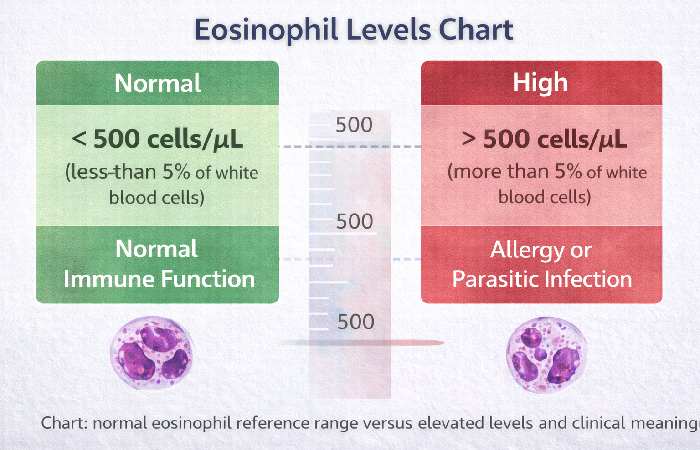
Doctors measure eosinophil levels using a blood test known as the complete blood count (CBC).
Typical normal ranges include:
| Measurement | Normal Range |
| Absolute eosinophil count | 30–350 cells/µL |
| Percentage of white blood cells | 1% – 6% |
Counts above 500 cells per microliter are considered elevated.
However, reference ranges may vary slightly depending on laboratory standards and patient characteristics.
Doctors classify high eosinophil counts based on severity.
| Eosinophil Count | Severity |
| 500–1500 cells/µL | Mild eosinophilia |
| 1500–5000 cells/µL | Moderate eosinophilia |
| Above 5000 cells/µL | Severe eosinophilia |
Persistent levels above 1500 cells/µL may be referred to as hypereosinophilia, which can sometimes damage organs if untreated.
Many medical conditions can cause elevated eosinophil levels.
Allergies are one of the most common causes of eosinophilia.
Conditions linked to allergies include:
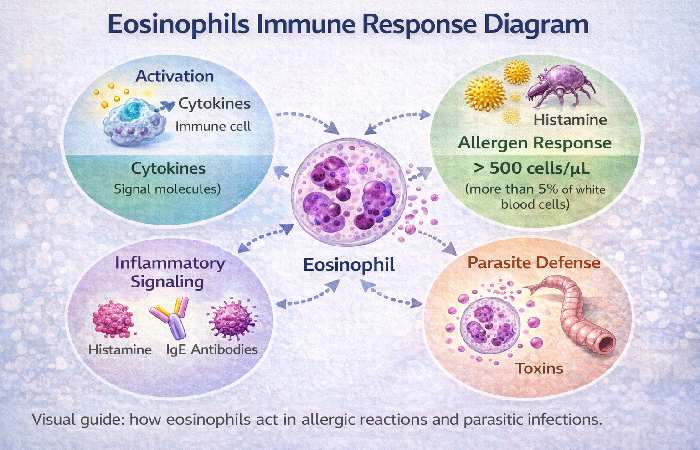
When the body detects allergens, the immune system releases eosinophils to help regulate the reaction.
Certain parasitic infections can significantly increase eosinophil levels.
Examples include:
Eosinophils help the immune system attack parasites that invade body tissues.
Some respiratory diseases are associated with increased eosinophils.
Examples include:
These conditions involve inflammation of the respiratory system.
Autoimmune diseases occur when the immune system mistakenly attacks healthy tissues.
Examples include:
These conditions may trigger increased eosinophil activity.
Several skin disorders are linked to eosinophilia.
Examples include:
These conditions involve immune responses that stimulate eosinophil production.
In rare cases, extremely high eosinophil levels may indicate blood-related diseases such as:
These conditions require specialized medical diagnosis and treatment.
High eosinophils themselves do not always cause symptoms. Instead, symptoms depend on the underlying condition.
Common symptoms may include:
These symptoms often reflect the underlying allergic, infectious, or inflammatory condition.
Doctors usually detect eosinophilia through routine blood testing.
These tests help determine the cause of elevated eosinophil levels.
Eosinophil levels can vary slightly between different populations.
Factors influencing these differences include:
For example, eosinophilia may be more common in regions where parasitic infections are prevalent.
Healthcare providers interpret blood test results based on local laboratory reference ranges and patient history.
While mild eosinophilia is usually harmless, extremely high levels can sometimes cause complications.
Possible complications include:
Persistent eosinophilia may lead to hypereosinophilic syndrome, which can damage organs if untreated.
Treatment focuses on addressing the underlying cause.
Allergy treatment
Antihistamines or corticosteroids may reduce allergic inflammation.
Antiparasitic medication
Parasitic infections may require specific medications to eliminate parasites.
Anti-inflammatory drugs
Autoimmune conditions may require medications that regulate immune activity.
Monitoring
If eosinophilia is mild and temporary, doctors may simply monitor blood levels.
Maintaining a healthy immune system can help keep blood cell levels balanced.
Helpful strategies include:
These practices support overall immune health.
An eosinophil count above 500 cells per microliter of blood is generally considered high and is referred to as eosinophilia.
Yes. Allergies are one of the most common causes of elevated eosinophil levels.
Mild elevations are usually harmless, but persistent or very high levels may indicate underlying health conditions.
Treatment depends on the underlying cause, such as allergies, infections, or inflammatory diseases.
You should seek medical advice if:
Understanding what high eosinophils mean is essential for interpreting blood test results and identifying possible health concerns. Eosinophils are an important part of the immune system, helping the body fight parasites and regulate allergic responses.
Although mild elevations are often harmless, persistent or extremely high eosinophil levels may indicate underlying conditions such as allergies, infections, autoimmune diseases, or blood disorders. Early medical evaluation and proper diagnosis can help determine the cause and ensure appropriate treatment.
By maintaining a healthy lifestyle and monitoring blood test results, individuals can better manage their immune health and reduce potential complications associated with eosinophilia.

Syed Sadiq is a health education content researcher who writes evidence-informed guides on symptoms awareness, preventive health habits, and digital safety topics affecting students and families. His articles focus on helping readers understand health-related information clearly before making decisions. Through DionHealthWeb, he publishes structured health-awareness content designed to support informed conversations between readers and healthcare professionals.