

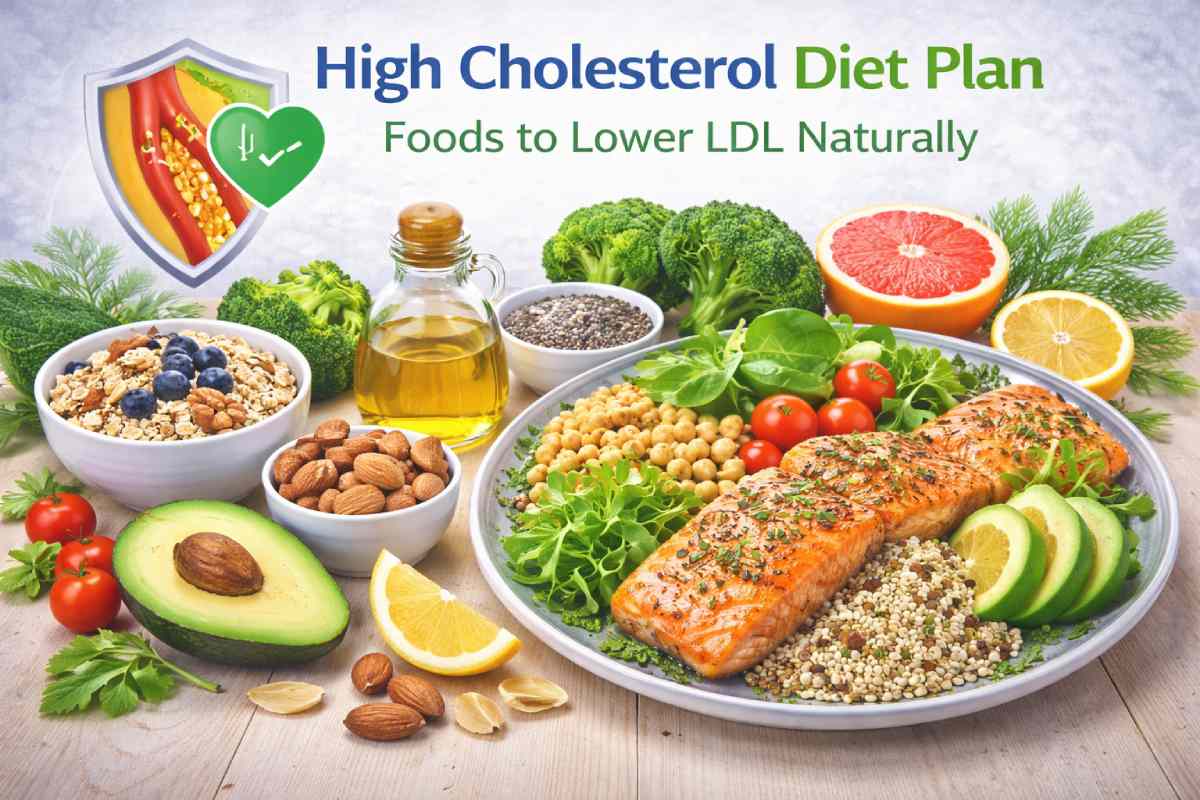
High Cholesterol Diet Plan: Doctor-Recommended Foods to Lower LDL and Protect Heart Health
High cholesterol is one of the most common silent risk factors for heart disease.
Many people discover elevated cholesterol levels only after routine blood tests because symptoms usually do not appear early.
The good news is that a structured high cholesterol diet plan can:
Diet is the first treatment doctors recommend before medication in many cases.
This guide explains exactly how to follow a practical, prevention-focused cholesterol-lowering eating strategy.
Cholesterol is not entirely harmful.
Your body needs cholesterol to:
Problems occur when LDL cholesterol becomes too high.
| Type | Role |
| LDL | Raises artery plaque risk |
| HDL | Removes excess cholesterol |
| Triglycerides | Stored fat linked to metabolic risk |
A good high cholesterol diet plan lowers LDL while improving HDL balance.
You may benefit if your blood report shows:
Even without abnormal labs, prevention diets reduce cardiovascular risk.
High cholesterol usually causes no early symptoms.
However, warning indicators sometimes include:
Because symptoms are subtle, diet prevention becomes essential.
A heart-protective nutrition strategy follows four principles:
Together these improve cholesterol balance naturally.
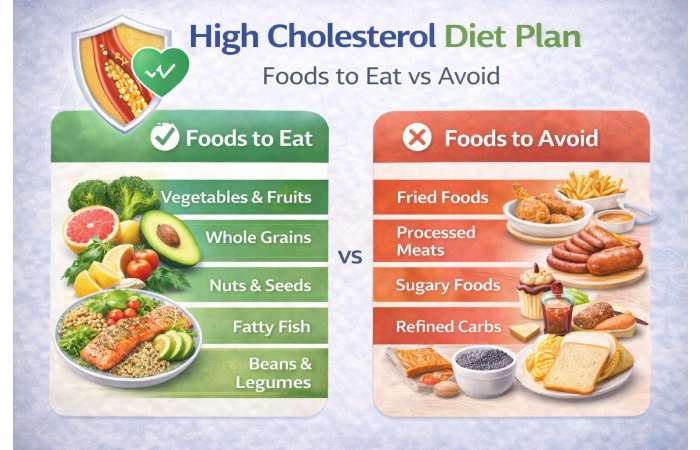
These foods actively support cholesterol reduction.
Contain beta-glucan fiber that lowers LDL absorption.
Examples:
Soluble fiber removes cholesterol from circulation.
Best options include:
Fiber improves lipid metabolism.
Especially helpful:
Vegetables reduce artery inflammation.
Heart-protective choices include:
These contain omega-3 fatty acids.
Replace butter with:
Healthy fats improve HDL cholesterol levels.
Reducing harmful foods produces the fastest improvement.
| Food Type | Why |
| Fried foods | Increase LDL |
| Processed meat | Raises inflammation |
| Bakery items | Contain trans fats |
| Sugary drinks | Raise triglycerides |
| Fast food | Damages lipid balance |
Even small reductions improve results.
Here is a realistic daily structure.
Oatmeal + fruit + nuts
Supports LDL reduction early in the day.
Apple or pear
Adds soluble fiber.
Whole wheat roti + vegetables + lentils
Balanced fiber and protein.
Green tea + roasted chickpeas
Improves metabolism.
Grilled vegetables + beans + salad
Light meals improve nighttime lipid regulation.
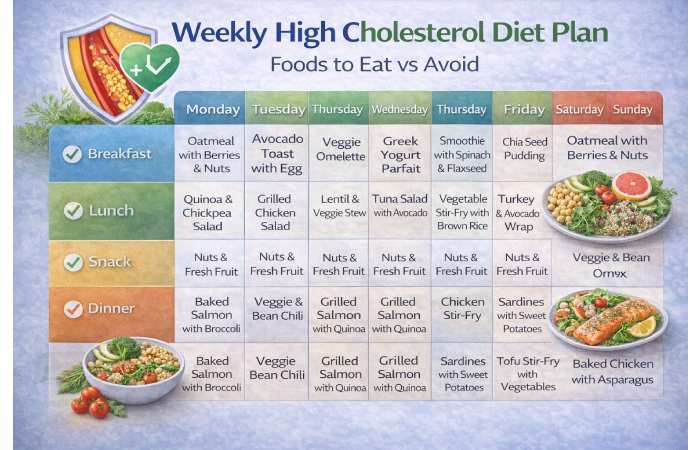
| Day | Focus Meal |
| Monday | Oats breakfast |
| Tuesday | Lentil lunch |
| Wednesday | Vegetable soup dinner |
| Thursday | Bean salad |
| Friday | Brown rice meal |
| Saturday | Fish (if non-vegetarian) |
| Sunday | Mixed vegetable day |
Rotation prevents diet fatigue.
Soluble fiber binds cholesterol inside the digestive tract.
This prevents cholesterol reabsorption into bloodstream circulation.
As a result:
LDL decreases
artery inflammation reduces
heart risk improves
Daily fiber intake should reach 25–35 grams.
Soluble fiber reduces cholesterol absorption in the bloodstream by binding bile acids during digestion, a mechanism confirmed by guidance from the American Heart Association cholesterol nutrition recommendations.
Omega-3 fats:
reduce triglycerides
protect blood vessels
improve circulation
Best sources include:
These support long-term prevention.
Diet prevention works best when started early.
Preventive benefits include:
reduced artery plaque formation
lower stroke risk
improved blood pressure
better insulin sensitivity
reduced inflammation markers
Preventive nutrition is more effective than late treatment.
Preventive dietary changes significantly reduce long-term cardiovascular disease risk when started early, as emphasized by Centers for Disease Control and Prevention cholesterol prevention guidance.
Diet works best when combined with:
regular walking
weight control
sleep improvement
stress management
hydration balance
Even 30 minutes of daily walking improves HDL cholesterol.
Losing even 5–7% body weight improves cholesterol levels.
Benefits include:
lower triglycerides
reduced LDL
improved HDL balance
Small changes produce measurable improvement.
Choose:
steaming
boiling
grilling
air-frying
Avoid:
deep frying
reheating oils
processed sauces
Cooking style matters as much as food choice.
Some patients require medication support.
Risk increases if:
LDL remains high after diet changes
family history exists
diabetes is present
blood pressure is elevated
Doctors may recommend statin therapy in these cases.
Avoid these errors:
removing all fats completely
skipping meals
eating “low-fat” processed foods
ignoring sugar intake
not tracking portion size
Balanced nutrition works better than extreme dieting.
Typical improvement timeline:
4 weeks:
better triglycerides
6 weeks:
lower LDL levels
12 weeks:
visible cardiovascular improvement markers
Consistency determines success.
Seek medical advice if:
LDL exceeds 160 mg/dL
family history exists
chest discomfort appears
blood pressure increases
diabetes is present
These increase heart disease risk.
Strongly recommended for:
adults over age 30
overweight individuals
diabetes patients
people with sedentary lifestyles
family history cases
Early prevention reduces long-term complications.
What is the fastest food to lower cholesterol?
Oats, nuts, and beans provide rapid LDL improvement.
Can cholesterol be reduced without medication?
Yes, mild cases respond well to diet and lifestyle correction.
Is rice allowed in a cholesterol diet plan?
Yes, especially brown rice or controlled portions of white rice.
How much fiber lowers cholesterol?
25–35 grams daily improves lipid balance.
How often should cholesterol be tested?
Every 6–12 months if elevated.
A structured high cholesterol diet plan helps lower LDL cholesterol, improve HDL balance, reduce artery inflammation, and prevent long-term cardiovascular disease when combined with physical activity and consistent lifestyle adjustments. Early dietary prevention remains one of the most effective strategies for protecting heart health and avoiding future complications.

Syed Sadiq is a health education content researcher who writes evidence-informed guides on symptoms awareness, preventive health habits, and digital safety topics affecting students and families. His articles focus on helping readers understand health-related information clearly before making decisions. Through DionHealthWeb, he publishes structured health-awareness content designed to support informed conversations between readers and healthcare professionals.