

Meet the people behind this publication


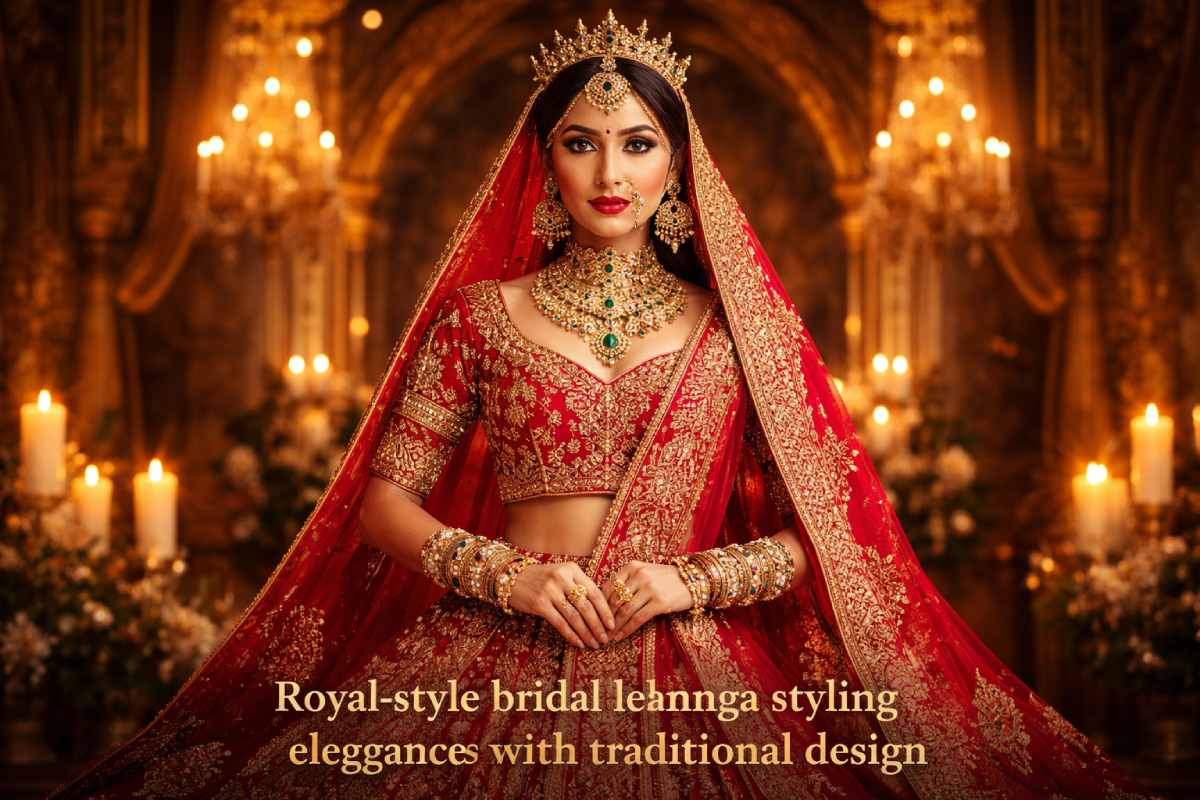
The term “Diadem Bridal Lehe” is becoming increasingly popular among Indian brides seeking a regal wedding look inspired by traditional royal styling. However, choosing a bridal outfit is not only a fashion decision. It also affects posture, movement, skin comfort, and mental well-being during ceremonies that often last many hours.
Many brides focus entirely on appearance and overlook how outfit weight, jewelry design, and fabric layering affect physical comfort throughout the wedding day. This guide explains how to enjoy the elegance of a royal bridal look while protecting your health and energy throughout your celebrations.
This article belongs in Patient EducationA Diadem Bridal Lehe combines two important bridal elements:
Traditionally, a bridal lehenga includes three main components:
Royal-style bridal outfits often feature layered embroidery, such as zari work, sequins, mirror detailing, and structured borders, which enhance visual impact but also increase garment weight.
Because weddings in India often involve long ceremonies, extended standing, photography sessions, and multiple rituals, the physical impact of heavier outfits becomes important to consider early in the selection process.
Traditional bridal lehengas typically consist of a skirt, blouse, and dupatta designed to balance ceremonial aesthetics with movement flexibility during wedding rituals.
The popularity of regal bridal styling has increased significantly over the last decade, driven by multiple cultural and media influences.
Some key reasons include:
These influences have encouraged brides to choose layered garments that reflect heritage aesthetics. However, comfort planning becomes essential when ceremonies extend across several hours or multiple days.
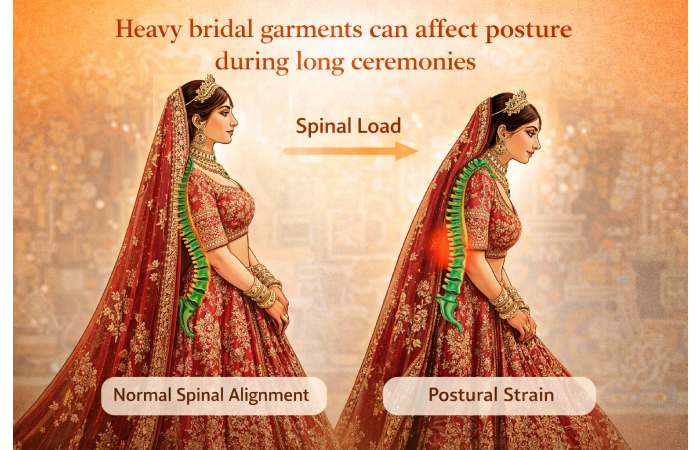
One of the most overlooked aspects of bridal outfit selection is how garment weight affects the body.
Heavier wedding garments may contribute to:
Even moderate increases in garment weight can create discomfort when standing continuously during rituals such as varmala exchanges or reception-stage greetings.
Testing outfit comfort before the ceremony helps prevent unexpected fatigue.
Wedding rituals often involve long periods of standing, sitting in structured positions, and slow walking in a limited space. These movements place extra stress on the spine when garments are heavily layered.
Healthy posture strategies include:
These small adjustments reduce strain on the lower back and improve stability during extended ceremonies.
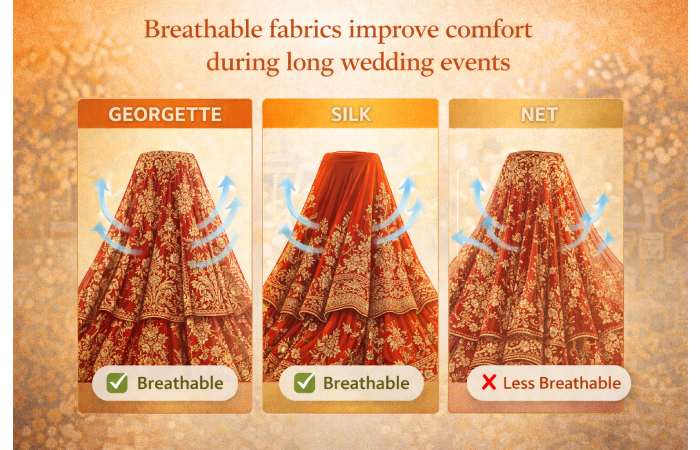
Skin comfort becomes especially important during weddings because garments are worn for many consecutive hours under lighting, makeup layers, and stage conditions.
Less breathable fabrics may increase the risk of:
More comfortable fabric choices include:
Soft lining materials help reduce friction and improve airflow throughout the ceremony.
Bridal outfit selection can influence emotional well-being more than many people expect.
Common stress factors include:
Comfort-focused outfit decisions improve confidence and help brides remain relaxed throughout the event schedule.
Feeling physically comfortable also improves energy levels during long social interactions with guests.
It is possible to maintain a royal appearance while improving comfort by making small structural adjustments.
Consider:
Balanced tailoring helps maintain elegance while improving mobility during ceremonies.
Crown-style bridal accessories contribute strongly to the diadem-inspired aesthetic, but they can also place pressure on the scalp and neck.
Using padded supports and lightweight alternatives can significantly reduce these effects while preserving the desired look.
Brides often get busy with photography sessions and rituals and may unintentionally skip meals or hydration.
Stable hydration supports stamina and improves overall comfort.
| Feature | Traditional Royal Styling | Lightweight Bridal Styling |
| Visual impact | High | Moderate |
| Comfort level | Lower | Higher |
| Mobility | Limited | Flexible |
| Ceremony suitability | Shorter rituals | Long ceremonies |
| Climate adaptability | Indoor preferred | Indoor + outdoor |
Choosing between these options depends on the ceremony duration and the venue conditions.
Structured bridal garments can still be a good choice when conditions support comfort.
They work best when:
Planning outfit use around ceremony timing helps reduce fatigue.
Many brides make avoidable comfort-related mistakes when selecting wedding garments.
Correcting these decisions early significantly improves ceremony-day comfort.
Before finalizing your outfit, perform a brief comfort test.
Recommended steps include:
These checks reduce unexpected discomfort during ceremonies.
Indian weddings often include multiple celebrations across several days, such as:
Wearing lighter garments for some events helps conserve energy for the main ceremony.
Alternating outfit weight across events improves comfort and reduces muscle fatigue.
Choosing a diadem bridal headdress should balance elegance with comfort so you can fully enjoy your wedding experience. Lightweight fabric selection, supportive jewelry styling, hydration planning, and posture awareness all contribute to a healthier ceremony experience while preserving the royal aesthetic many brides desire.

Syed Sadiq is a health education content researcher who writes evidence-informed guides on symptoms awareness, preventive health habits, and digital safety topics affecting students and families. His articles focus on helping readers understand health-related information clearly before making decisions. Through DionHealthWeb, he publishes structured health-awareness content designed to support informed conversations between readers and healthcare professionals.