

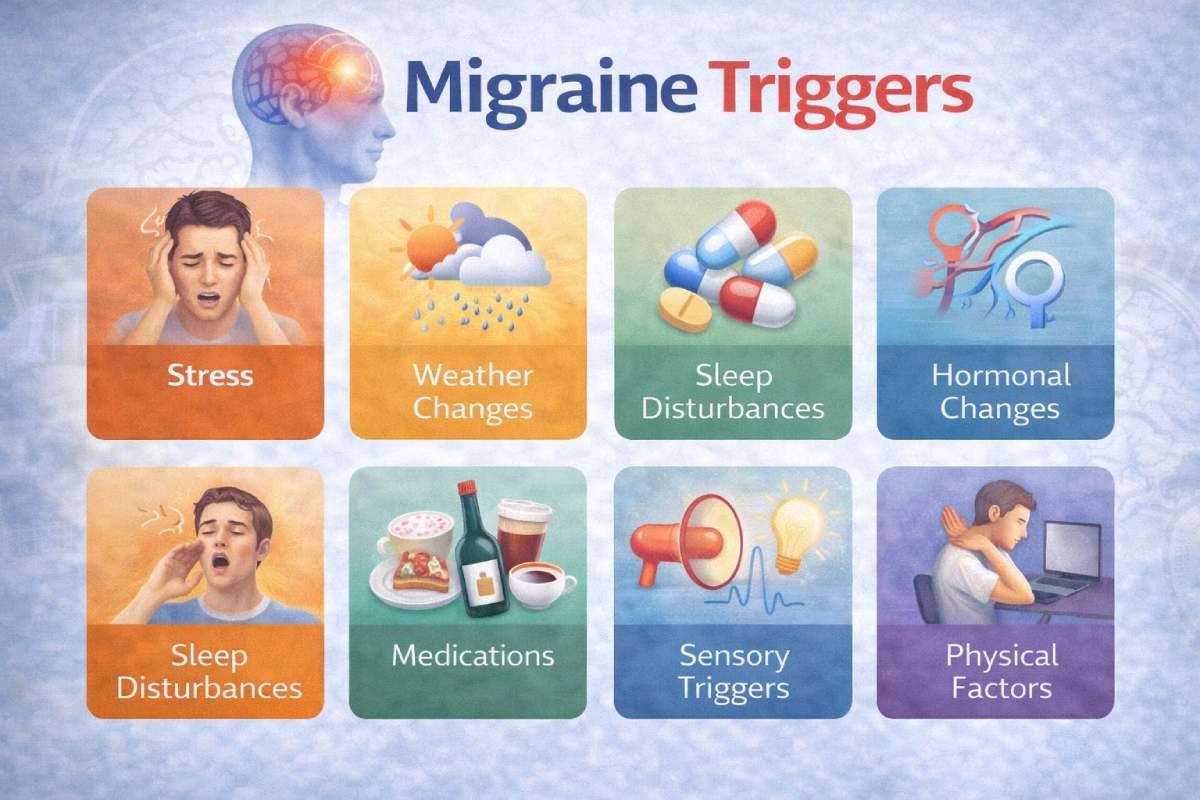
Migraine Triggers List: 35 Common Causes, Early Warning Symptoms, and Prevention Strategies
Migraines are not just headaches.
They are neurological events triggered by internal and external factors affecting brain signaling, blood vessels, and sensory processing.
Understanding a reliable migraine triggers list helps patients:
This guide explains the most important migraine triggers doctors monitor in clinical settings, along with symptoms that help identify when a migraine is developing.
A migraine trigger is any stimulus that increases the likelihood of a migraine episode starting.
Triggers do not directly cause migraines.
Instead, they lower the brain’s tolerance threshold.
Once that threshold is crossed, neurological changes begin that lead to migraine symptoms.
Most patients have multiple triggers, not just one.
| Category | Example Triggers |
| Stress | Anxiety, workload changes |
| Sleep | Oversleeping or sleep loss |
| Food | Chocolate, caffeine withdrawal |
| Hormones | Menstrual cycle shifts |
| Environment | Bright light, strong smells |
| Hydration | Dehydration |
| Weather | Pressure changes |
Tracking patterns across these categories improves prevention success.
Migraine triggers affect:
These changes increase sensitivity to light, sound, smell, and movement.
This explains why migraines feel different from normal headaches.
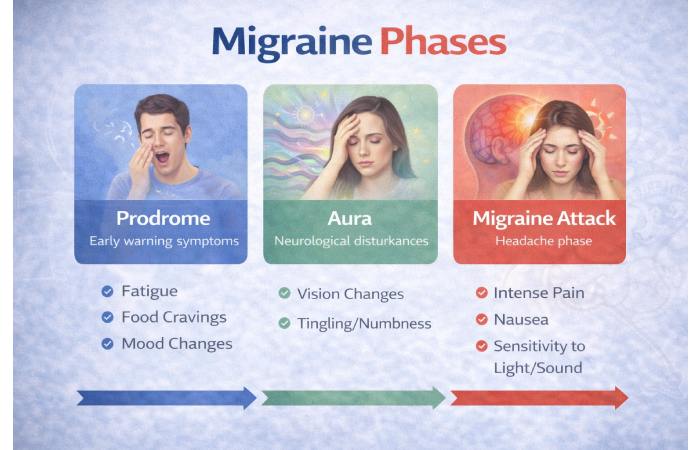
Recognizing symptoms before pain begins is one of the most powerful prevention strategies.
Many patients experience warning signals hours before headache onset.
These are called prodrome symptoms.
Common early symptoms include:
These symptoms may appear 6 to 24 hours before pain begins.
Identifying them allows earlier treatment intervention.
Some people experience aura before migraines.
Aura symptoms may include:
Aura usually lasts between 10 and 60 minutes.
Not all migraines include aura.
But when present, aura strongly confirms migraine diagnosis rather than tension headache.
During the main migraine phase, symptoms typically include:
Pain intensity ranges from moderate to severe.
Many patients must stop daily activity during attacks.
Many people don’t realize migraines continue after pain ends.
Postdrome symptoms include:
This phase may last 24 hours.
Recognizing postdrome prevents misinterpreting lingering symptoms as new illness.
Stress is the most common migraine trigger worldwide.
Examples include:
Interestingly, migraines often occur after stress ends, not during stress itself.
This is called a stress-letdown migraine.
Sleep disruption affects brain recovery cycles.
Common sleep triggers include:
Maintaining consistent sleep timing reduces migraine frequency significantly.
Certain foods increase migraine sensitivity in some patients.
Common examples include:
Not every patient reacts to every food trigger.
Tracking personal response patterns is essential.
Even mild dehydration can activate migraine pathways.
Warning signs include:
Increasing daily water intake often reduces migraine frequency.
Hormonal fluctuations are a major trigger, especially in women.
Common hormonal triggers include:
Menstrual migraines are among the most predictable migraine types.
Hormonal migraine patterns are widely recognized in clinical research, especially during menstrual cycle transitions involving estrogen level changes.
Environmental sensitivity is common among migraine patients.
Examples include:
Reducing exposure lowers attack risk.
Barometric pressure changes affect brain blood flow regulation.
Common weather triggers include:
Weather-trigger migraines often follow predictable seasonal patterns.
Weather-related migraine triggers have been documented in patients sensitive to atmospheric pressure shifts affecting vascular regulation.
Modern migraine triggers increasingly include technology use.
Risk factors include:
Blue light filters and screen breaks reduce trigger intensity.
Frequent use of pain medication may worsen migraines.
This is called medication-overuse headache.
Warning signs include:
Medical supervision is important in these cases.
Strong odors activate sensory pathways involved in migraines.
Common examples include:
Avoiding exposure helps prevention.
Seek medical evaluation if migraines include:
These symptoms require urgent assessment.
Avoid these mistakes:
Trigger identification works best using pattern tracking.
Follow this step-by-step process:
Step 1:
Track migraine timing
Step 2:
Record meals
Step 3:
Monitor sleep schedule
Step 4:
Track stress levels
Step 5:
Observe weather patterns
Within weeks, patterns usually appear.
Prevention strategies include:
Combining strategies produces the best results.
This guide is especially useful for:
What is the most common migraine trigger?
Stress and sleep disruption are the most frequent triggers.
Can dehydration cause migraines?
Yes, even mild dehydration increases migraine risk.
Are food triggers the same for everyone?
No. Food triggers vary between individuals.
How early do migraine symptoms start?
Warning signs may appear up to 24 hours before pain begins.
Should migraines always be treated medically?
Occasional migraines may be managed with lifestyle adjustments, but frequent attacks require evaluation.
Understanding a structured migraine triggers list helps patients recognize early warning symptoms, identify personal trigger patterns, and reduce migraine frequency through preventive lifestyle adjustments. When symptoms are tracked consistently and addressed early, many migraine episodes can be shortened or avoided entirely with proper medical guidance and trigger awareness.