

Meet the people behind this publication


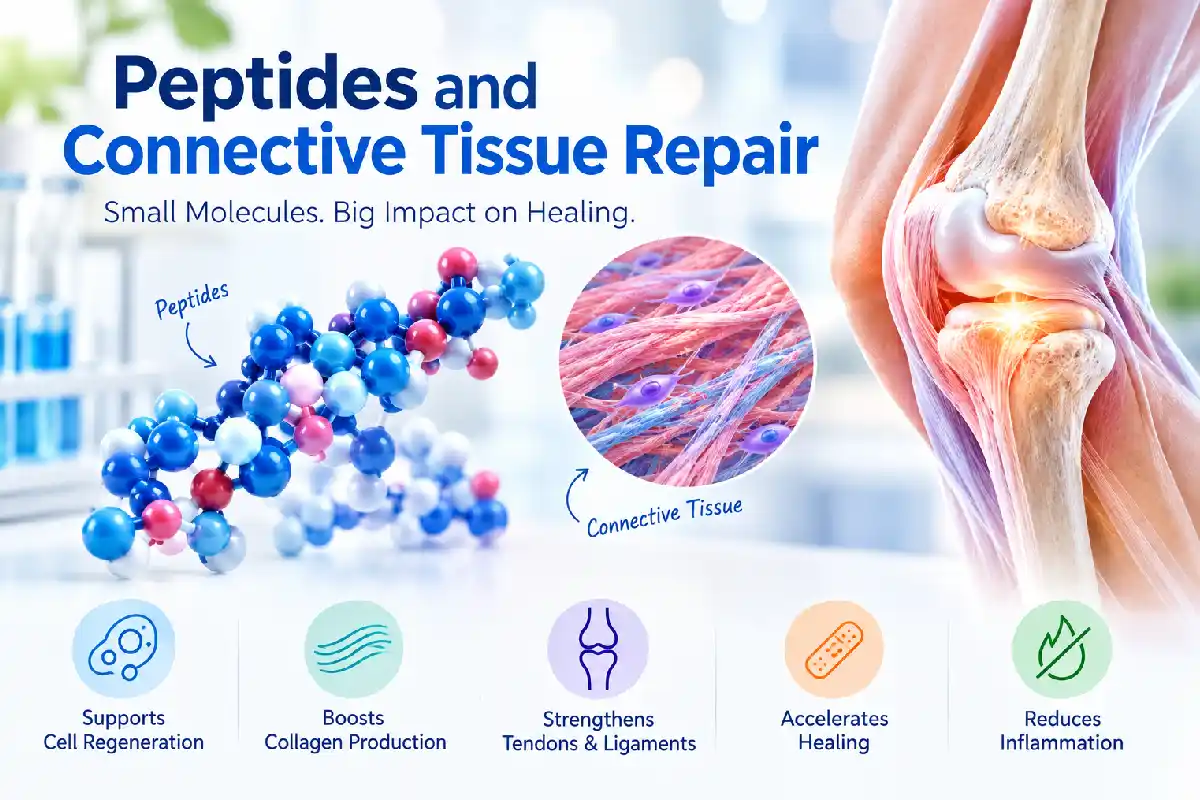
Peptides and Connective Tissue Repair: A challenging problem with any injury is that it is possible for the athlete to feel they are ready for training, but their body isn’t. Two or three sessions, a change of terrain, or a rapid increase in weight can turn something that was a little nagging into something that takes weeks to treat and to come back from. Knowing the difference in demand versus return is part of competitive performance. That’s where peptides become foundational in helping the body’s physical repair catch up to how the athlete mentally feels.
This article belongs in Dion Health WebWhile your muscles may seem to recover a little over a day or two, you could still be experiencing a little stiff joint or tendon around this area. How is this possible? Blood flow. Tendons and ligaments have less blood flow compared to muscles, which means less oxygen and nutrients are flowing there to aid in healing. How about cartilage!
These, as well, depend upon collagen, which is the primary structural protein that fortifies the tissue to withstand movement and manipulation. This is a slow process.
Researchers are now studying peptides because some of them could be used by your body to trigger activities that may greatly benefit tissue repair. For example, BPC-157 peptide targets the lack of blood flow by promoting the growth of new blood vessels. It also trigger fibroblasts to migrate to the injury site and accelerate the formation of organized collagen fibers.
And if you are wondering, Where can I buy peptides, it’s crucial to identify a reliable storefront that offers research catalogue to help you with easy onboarding without having to do guesswork. However, note that numbing pain doesn’t mean your tissues are getting stronger, and jumping back in too quickly can backfire.
In the context of regenerative medicine, BPC-157 and GHK-Cu are becoming popular regenerative interventions. While the popularity of these is quite popular, their clinical evidence does not hold equal ground.
BPC-157 shows possible effects on tissue repair, blood vessel growth and repair of tendons. One of the practical outcomes of this type of peptide is increased delivery of nutrients to the recovering tissues.
And when it comes to GHK-Cu: A copper-binding peptide that has been studied to be associated with collagen function, wound healing and skin health. It also boosts decorin—a small proteoglycan essential for proper collagen fibril organization and strong connective tissue formation.
However, if an athlete has chronic pain in their tendons, this study would suggest that more investigation should be made into using either of the compounds for an injury, and is not a guaranteed treatment option for every injury. An experienced sports medicine doctor can tell the difference.
The decision whether to use single vials or blends may depend on level of precision targeted, control, and convenience. Single-compounds will let you target a specific pathway at a time, monitor results, and come up with more precise decision. For example, if you experience a side effect, you don’t have to it becomes easier to trouble shoot.
On the other hand, pre-mixed formulations like BPC-157 and TB-500, or growth hormone-releasing pairs like CJC-1295 and Ipamorelin are designed to complement each other and cover multiple biological repair phases at once. However, blends are only advisable if you are working with a well-researched pair and brand. And if you are starting out, choose single peptides.
Without proven human testing, any claim that peptide combinations will provide faster, more complete healing is speculation.
You believe your compound is of high quality – but a product isn’t a symbol of quality and safety. Numerous products available for purchase as research peptides online make unsubstantiated claims of their make-up, contamination risks, and false or incomplete records of sterility. A certificate of analysis may be useful for a particular batch that was tested, but doesn’t determine the safety of a product.
This is especially the case if an athlete is faced with a decision to have an injection and speed up their return to training. Wrongly prepared products could introduce added hazards and there is generally limited safety data to help answer the most critical questions.
Athlete who would return using anti-doping codes should also considers the existing laws. Some promotional drugs are prohibited and one product’s advertisements don’t guarantee compliance.
Professional assessment, appropriate rehabilitation and a gradual resumption of activity remain better options for recovery.
In essence, every athlete faces different recovery challenges, from muscle strains and tendon injuries to joint discomfort. This makes it important to understand the biological pathways a peptide may affect and whether there is reliable evidence supporting its intended use. A brand committed to consistent research and transparency will clearly explain its ingredients, available evidence, potential risks, and limitations rather than making promises that go beyond what science can establish.

Syed Sadiq is a health education content researcher who writes evidence-informed guides on symptoms awareness, preventive health habits, and digital safety topics affecting students and families. His articles focus on helping readers understand health-related information clearly before making decisions. Through DionHealthWeb, he publishes structured health-awareness content designed to support informed conversations between readers and healthcare professionals.