

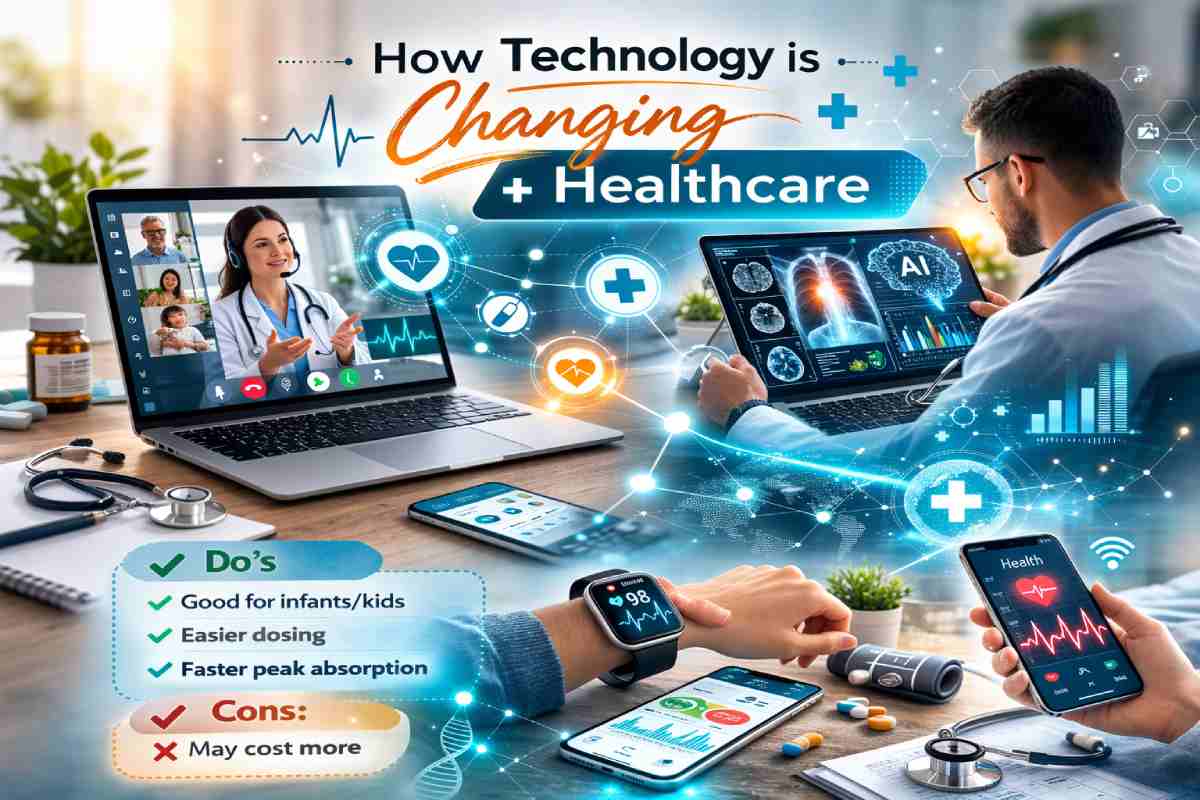
How technology is changing healthcare is the question every clinician, patient, and hospital executive asks today — because the answer determines budgets, hiring, and patient outcomes for the next decade. From telemedicine and wearables to AI diagnostics, robots in the OR, and smarter data systems, technology is remaking how care is delivered, who delivers it, and what “healthcare” even looks like.
Three factors explain the speed of change:
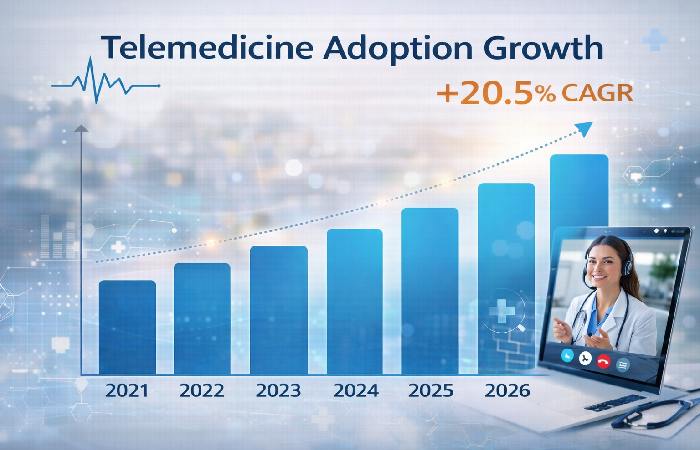
Market analysts estimate that telemedicine and remote-care services continue to grow strongly, with large markets and rising adoption rates across regions.
Telemedicine moved from novelty to necessity. Virtual visits reduce travel, expand specialist access to underserved areas, and are convenient for follow-ups and chronic disease checks.
What the evidence shows: telemedicine increases access and patient satisfaction and reduces some in-person visits; the market continues to expand rapidly.
Practical tip: successful telemedicine programs redesign workflows — e.g., pre-visit vitals collection, asynchronous messaging, and integration with EHR scheduling — rather than simply “adding video visits.”
Remote patient monitoring (RPM) and wearables (smartwatches, connected BP cuffs, glucose monitors) are changing chronic disease management. Recent systematic reviews show RPM can reduce hospitalizations and improve adherence and safety, though effects vary by condition and intervention design.
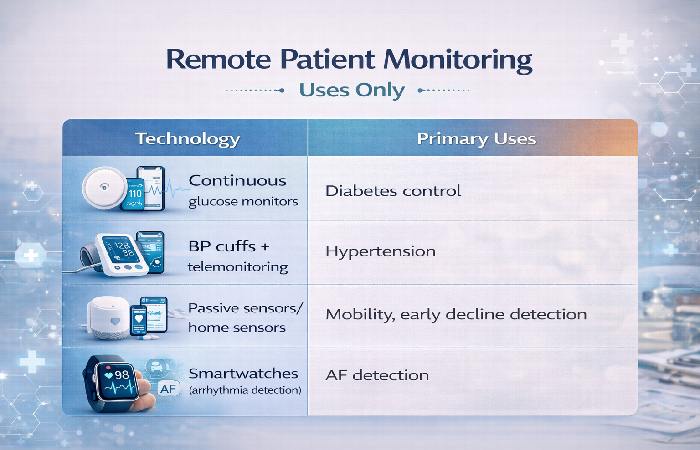
| Technology | Primary uses | Evidence snapshot | Main challenge |
| Continuous glucose monitors | Diabetes control | Improves time-in-range, reduces hypoglycemia (strong evidence) | Cost, reimbursement |
| BP cuffs + telemonitoring | Hypertension | Associated with improved BP control and outcomes. | Patient adherence, data flow |
| Passive sensors/home sensors | Mobility, early decline detection | Correlate with clinical assessments; promising as digital biomarkers. | Data interpretation & false positives |
| Smartwatches (arrhythmia detection) | AF detection | Good sensitivity for AF screening in selected populations | Workflow for confirmatory testing |
Note on outcomes: Several recent meta-analyses report that RPM reduces hospital admissions and can lower costs in specific populations, particularly cardiovascular and cancer care.
AI is the most hyped technology—and for good reason. Applications include image interpretation (radiology, pathology), predictive analytics (readmission risk, sepsis), NLP for clinical notes, and drug discovery.
Evidence & economics: Recent systematic reviews find that many AI tools improve diagnostic accuracy and can be cost-effective, but real-world validation and continuous monitoring are still limited. A broad review of cost-effectiveness across specialties found AI often improves accuracy and may reduce unnecessary procedures. However, many published models rely on static evaluation and may overestimate long-term benefits.
Regulatory & safety note: AI models may perform differently in the real world; bias and explainability remain serious concerns. Regulators are increasing scrutiny, and many experts warn about liability and accountability when AI informs care decisions.
Practical example: New predictive models (e.g., large health-data LLM adaptations) can forecast multi-disease risk decades in advance, which could transform prevention but requires careful ethical & privacy frameworks before clinical rollout.
EHRs are the backbone of digital care, but fragmented records and poor interoperability limit benefits. Fewer provider clicks and better data exchange unlock population health, AI utility, and smoother workflows.
Interoperability is not glamorous, but it’s the single most important enabler for most other technologies.
Robotic surgery, AR-assisted procedures, and simulation are changing procedural care.
Benefits: finer surgical control, augmented visualization, improved training.
Cost & scaling: high equipment costs and specialized training slow widespread use, but adoption grows in high-volume centers.
Rapid genome sequencing and cheaper assays enable the diagnosis of rare diseases and targeted oncology. AI accelerates variant interpretation, but clinical integration and payer coverage are evolving.
Market note: genomic data also feeds predictive AI models, creating feedback loops for prevention and therapy selection.
Technology raises important risks:
Governance checklist: transparency, regular performance monitoring, human-in-the-loop decision rules, auditing, and incident reporting.
Tech investments can save money (fewer admissions, better triage) but require upfront capital. Systematic economic reviews show AI interventions can be cost-effective in certain use cases — but results vary by specialty and implementation quality.
Advice for leaders: pilot with clear outcome metrics (utilization, readmission, patient satisfaction) and obtain independent health economic analyses before scaling.
How technology is changing healthcare is not a single revolution but many coordinated shifts — connectivity, sensors, smarter software, and better data plumbing. When health systems focus on human workflows, equity, and evidence, technology becomes a multiplier for better, safer care.